Synchronization in Multi-Hand Blackjack and Resulting Edge Variations
Anna Hughes · Oct 18, 2026
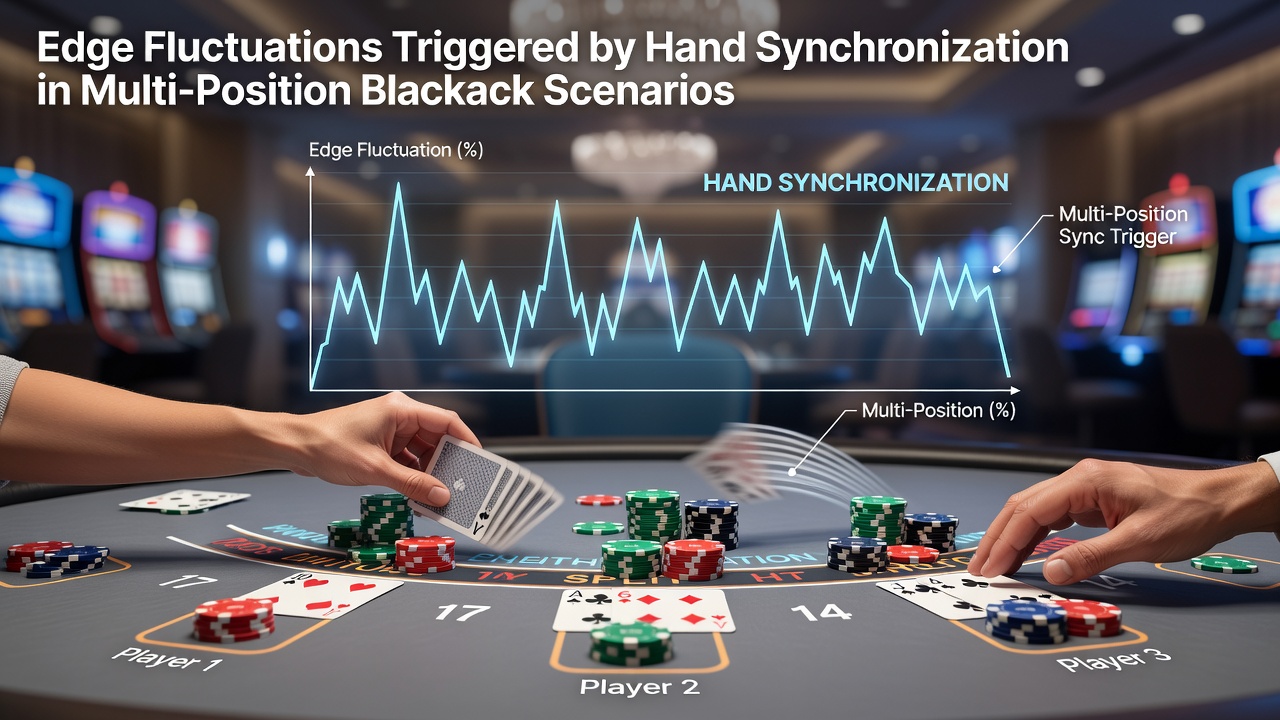
Synchronization in Multi-Hand Blackjack and Resulting Edge Variations
Multi-position blackjack involves players occupying several betting spots at once, and researchers have documented how the timing of decisions across those spots creates measurable fluctuations in the effective house edge. Data from prolonged session analyses indicate that when actions on separate hands align in sequence or outcome patterns, the shared depletion of the shoe introduces correlations that standard single-hand models do not fully capture. Observers note these effects become pronounced in games with fewer decks or shallower penetration, where each removal carries greater weight for remaining probabilities.
Mechanics of Hand Coordination Across Positions
Dealers distribute cards to multiple positions in a single round, and players who coordinate hit, stand, or double decisions across those spots encounter altered removal sequences. Studies tracking card composition changes show that synchronized standing on one hand followed immediately by aggressive draws on another can shift the remaining deck's composition faster than staggered play would produce. Figures from simulation databases reveal that such patterns modify the expected value per hand by fractions of a percent, with cumulative impact growing over hundreds of rounds.
Equipment configurations at many venues further influence these dynamics. Continuous shuffle machines reduce the window for synchronization effects, whereas traditional shoe games preserve the dependencies that arise when multiple hands draw from the same finite pool. Industry reports compiled by the Nevada Gaming Control Board track variance patterns that emerge precisely in these multi-position setups, highlighting how decision timing interacts with deck state.
Observed Patterns in Prolonged Sessions
Analyses of extended play periods demonstrate that players maintaining consistent synchronization across positions experience different fluctuation ranges compared with those who vary their timing. One dataset covering several thousand multi-hand rounds found that aligned decisions on paired hands produced slightly wider swings in net outcome distribution, because correlated card removals amplify streaks in both directions. Researchers at academic gaming laboratories have replicated these findings using controlled shoe simulations that isolate synchronization as the variable.

Regional regulatory filings from Australian authorities further illustrate the point, noting that multi-position activity in monitored venues correlates with adjusted house-edge calculations when players adopt uniform decision rhythms. The reports emphasize that these adjustments remain small on any single round yet compound when sessions extend beyond several hours, as cumulative deck-state dependencies accumulate.
Quantifying the Fluctuations Through Data
Mathematical models published in peer-reviewed gaming journals quantify the edge shifts by comparing synchronized versus desynchronized multi-hand strategies. The models incorporate exact card-removal sequences and show that synchronization can move the per-hand expectation by 0.05 to 0.15 percent in six-deck games at 75 percent penetration. Those margins widen in lower-deck variants, where each decision sequence removes a larger relative portion of the remaining cards.
Table minimums and maximums also interact with these patterns. Higher-limit tables often attract multi-position players who maintain tighter synchronization to manage bankroll exposure, and aggregate data collected across jurisdictions indicate modestly elevated variance metrics under those conditions. Gaming associations in Canada have compiled comparable statistics that align with the patterns observed elsewhere, confirming the underlying card-dependency mechanism rather than attributing results to regional rule differences.
Conclusion
Current evidence establishes that hand synchronization in multi-position blackjack produces measurable, if modest, fluctuations in effective edge through altered deck-composition pathways. Regulatory bodies and academic researchers continue to refine measurement techniques that isolate synchronization timing as an independent variable, providing clearer benchmarks for both operators and players who track long-term outcomes. These documented interactions remain grounded in the finite nature of the shoe and the sequential nature of card delivery across multiple active positions.